Table of Contents
◉ Introduction ◉ The Short Answer ◉ Reader Roadmap ◉ A Personal Brand Is Not a Logo. It Is a Market Signal. ◉ The Lean Personal Brand Stack: Tools You Actually Need ◉ Start With Positioning Before You Start Posting ◉ Choose One Primary Platform and One Owned Channel ◉ Build a Content System Around Proof, Not Performance Theater ◉ Design a Brand System That Makes You Recognizable ◉ Turn Attention Into Owned Audience Growth ◉ Create an Offer Before You Feel “Ready” ◉ Step-by-Step: Build Your Personal Brand Workflow in 30 Days ◉ Cost and ROI Considerations ◉ Privacy, Security, and Compliance Considerations ◉ When Not to Hire an Agency Yet ◉ Common Mistakes and Troubleshooting ◉ Practical Mini Case Study: A Consultant Builds a Brand Without an Agency ◉ FAQ ◉ Conclusion ◉ Sources
A profitable personal brand is not built by posting more often, buying prettier templates, or copying creators who already have an audience. It is built by making a specific promise to a specific audience, showing proof consistently, and turning attention into trust, leads, conversations, and eventually revenue.
That matters because the digital tool stack available to solo founders, consultants, creators, coaches, freelancers, and subject-matter experts is now powerful enough to replace many early agency functions. You can research your audience, design brand assets, publish content, manage email, schedule calls, accept payments, and track results without a large team.
This article is for professionals who want to build a personal brand as a business asset, not a vanity project. You do not need advanced design skills, a full-time editor, or a six-month brand strategy engagement. You do need focus, a repeatable workflow, and enough restraint to avoid turning your brand into a pile of disconnected tools.
You will learn how to define your positioning, choose a lean tech stack, create useful content, build an audience you actually own, and measure whether your brand is moving toward profit.
The Short Answer
You can build a profitable personal brand without hiring an agency by combining clear positioning, consistent publishing, a simple offer, and a focused digital workflow. The tools matter, but they should support the business model instead of becoming the business model.
Start with one audience, one credibility angle, one primary platform, one email list, and one paid offer. Use design tools such as Adobe Express or Canva for consistent visuals, a workspace tool such as Notion for planning, a publishing tool such as Buffer for scheduling, an email platform such as Mailchimp or Substack for owned distribution, and a payment or booking tool such as Stripe Payment Links or Calendly when you are ready to convert interest into revenue.
A profitable personal brand usually needs four assets: a clear point of view, useful content, a trusted relationship with an audience, and a way for people to buy or book. Digital tools can make those assets easier to build, but they cannot replace judgment, expertise, or credibility.
The biggest mistake is trying to look like a mature media company before proving demand. A better path is to publish useful material, collect audience signals, turn recurring questions into offers, and improve the system every week.
Reader Roadmap
• How personal branding becomes a revenue system, so you can avoid chasing visibility that does not convert.
• Which digital tools belong in a lean personal-brand stack, so you can avoid subscription clutter.
• How to design a weekly content workflow, so you can publish consistently without outsourcing everything.
• Where email, landing pages, scheduling, and payments fit, so your audience has a clear next step.
• What mistakes usually block profitability, so you can diagnose weak positioning, weak offers, and weak analytics early.
A Personal Brand Is Not a Logo. It Is a Market Signal.
A personal brand is the set of expectations people attach to your name. In business terms, it answers a practical question: “Why should someone trust you with this problem?”
That trust can turn into revenue in several ways:
• Consulting or advisory calls
• Freelance services
• Coaching or education products
• Speaking opportunities
• Paid newsletters or communities
• Affiliate revenue
• Sponsorships
• Digital products
• Job opportunities or partnerships
The profitable part does not come from being known by everyone. It comes from being recognized by the right people for a specific problem.
For example, “I help small business owners use AI” is too broad. “I help solo real estate agents turn messy client follow-up into simple AI-assisted workflows” is more useful because the audience, problem, and outcome are clearer.
Google’s guidance on helpful content is relevant here even beyond search. It emphasizes creating content primarily for people, with useful, reliable information rather than material made mainly to attract traffic (Google Search Central, 2026). (developers.google.com) That same standard applies to personal branding: helpful specificity usually beats polished generality.
The Lean Personal Brand Stack: Tools You Actually Need
A solo personal brand does not need a complex marketing department. It needs a small set of tools that cover five jobs:
• Think: capture ideas, positioning, offers, and audience questions
• Create: design posts, short videos, carousels, lead magnets, and simple visuals
• Publish: distribute consistently across one or two platforms
• Convert: collect emails, book calls, or accept payments
• Measure: understand what is attracting attention, trust, and revenue
Here is a practical decision matrix.
| Job | Tool Category | Example Tools | Use It For | Avoid It If |
|---|---|---|---|---|
| Plan | Workspace or content calendar | Notion, Google Docs, Airtable | Ideas, scripts, offers, publishing schedule | You already have a simple system you use consistently |
| Create | Design and video tool | Adobe Express, Canva | Social posts, carousels, thumbnails, simple videos | You need advanced production or motion graphics |
| Publish | Social scheduling | Buffer, native platform schedulers | Scheduling, repurposing, basic analytics | You are still testing and posting only once a week |
| Own audience | Email/newsletter | Mailchimp, Substack, ConvertKit | Email capture, newsletters, lead magnets | Your audience has not shown interest in deeper content yet |
| Convert | Booking/payment | Calendly, Stripe Payment Links, Gumroad | Calls, paid sessions, simple checkout | You do not have a defined offer |
| Measure | Analytics | GA4, platform analytics, email reports | Traffic, conversions, audience behavior | You will not review the data regularly |
Notion describes itself as a workspace for notes, projects, docs, and collaboration, which makes it useful as a lightweight brand operating system (Notion, 2026). (notion.com) Adobe Express offers design, photo, video, social content, and generative AI features in an all-in-one editor, making it practical for non-designers who need consistent output (Adobe, 2026). (adobe.com) Canva’s Brand Kit lets users organize logos, colors, fonts, and brand assets in one place, which can reduce visual inconsistency as the brand grows (Canva, 2026). (canva.com)
The point is not to use every tool. The point is to assign one tool to one job.
Start With Positioning Before You Start Posting
Most personal brands fail because the creator starts with content formats instead of market position.
Before you choose a platform, write one sentence:
“I help [specific audience] achieve [specific outcome] by solving [specific problem] using [your method or expertise].”
Examples:
• “I help first-time SaaS founders turn customer interviews into clearer landing pages.”
• “I help independent fitness coaches build simple automation systems for lead follow-up.”
• “I help freelance designers use AI tools to speed up proposals without weakening creative quality.”
• “I help small law firms explain complex legal topics in plain English online.”
This positioning sentence is not public copy yet. It is a filter. It tells you what to post, what to ignore, what examples to use, which tools matter, and what kind of offer makes sense.
The Three-Part Positioning Test
A useful personal-brand position should pass three tests.
First, the audience should recognize themselves. “Entrepreneurs” is vague. “Solo consultants selling to B2B clients” is clearer.
Second, the problem should be painful enough to justify attention. People may like motivational posts, but they pay for solved problems.
Third, your credibility should be visible. Credibility can come from professional experience, portfolio work, original research, client outcomes, technical skill, teaching ability, or a distinctive point of view. Do not invent proof. Use what you can honestly demonstrate.
Choose One Primary Platform and One Owned Channel
A common agency-style mistake is launching everywhere at once: LinkedIn, TikTok, Instagram, YouTube, X, Threads, a blog, a newsletter, and a podcast. That may look professional, but it usually creates scattered effort.
Pick one primary discovery platform and one owned channel.
Your discovery platform is where new people find you. For many U.S. professionals, LinkedIn is a strong option because it is built around professional identity, expertise, and business conversations. LinkedIn’s own creator guidance emphasizes building a professional brand through valuable and engaging content formats, including posts, articles, newsletters, and video (LinkedIn, 2026). (members.linkedin.com) LinkedIn newsletters can be discovered, read, shared, and subscribed to by members, making them useful for recurring professional publishing (LinkedIn Help, 2025). (linkedin.com)
Your owned channel is where you build a direct relationship. Email is still the simplest version. A social follower is rented attention; an email subscriber is closer to a business asset.
Mailchimp provides audience-building tools such as forms, email campaigns, segmentation, and reporting, while its landing page documentation explains that landing pages are standalone pages used for goals such as promoting an offer or hosting a signup form (Mailchimp, 2026). (mailchimp.com) Substack can also work well for writers and experts who want a newsletter-first model, especially when the paid product is the writing itself.
Build a Content System Around Proof, Not Performance Theater
The fastest way to sound generic is to publish “thought leadership” without evidence. A profitable personal brand needs proof.
Proof does not have to mean huge case studies. It can be:
• A before-and-after teardown
• A practical checklist
• A mistake you fixed
• A workflow you use
• A client question you can answer without revealing private information
• A comparison between two approaches
• A template
• A lesson from a failed experiment
• A short explanation of a confusing concept
• A decision framework
Instead of asking, “What should I post today?” ask, “What does my audience need to understand before they trust me with this problem?”
For a consultant, that might mean publishing breakdowns of bad landing pages, weak onboarding emails, or confusing AI workflows. For a designer, it might mean explaining why a brand system fails in real social content. For a productivity expert, it might mean showing how to reduce context switching with a simple automation.
This is where tools help. Use Notion or another workspace to keep a “proof library” with columns such as:
• Audience question
• Pain point
• Example
• Content format
• CTA
• Related offer
• Status
• Performance notes
Buffer can help create, organize, repurpose, publish, and analyze social content across channels, including AI-assisted drafting features according to its official product page (Buffer, 2026). (buffer.com) That is useful only if your inputs are specific. A scheduler cannot fix weak thinking.
Design a Brand System That Makes You Recognizable
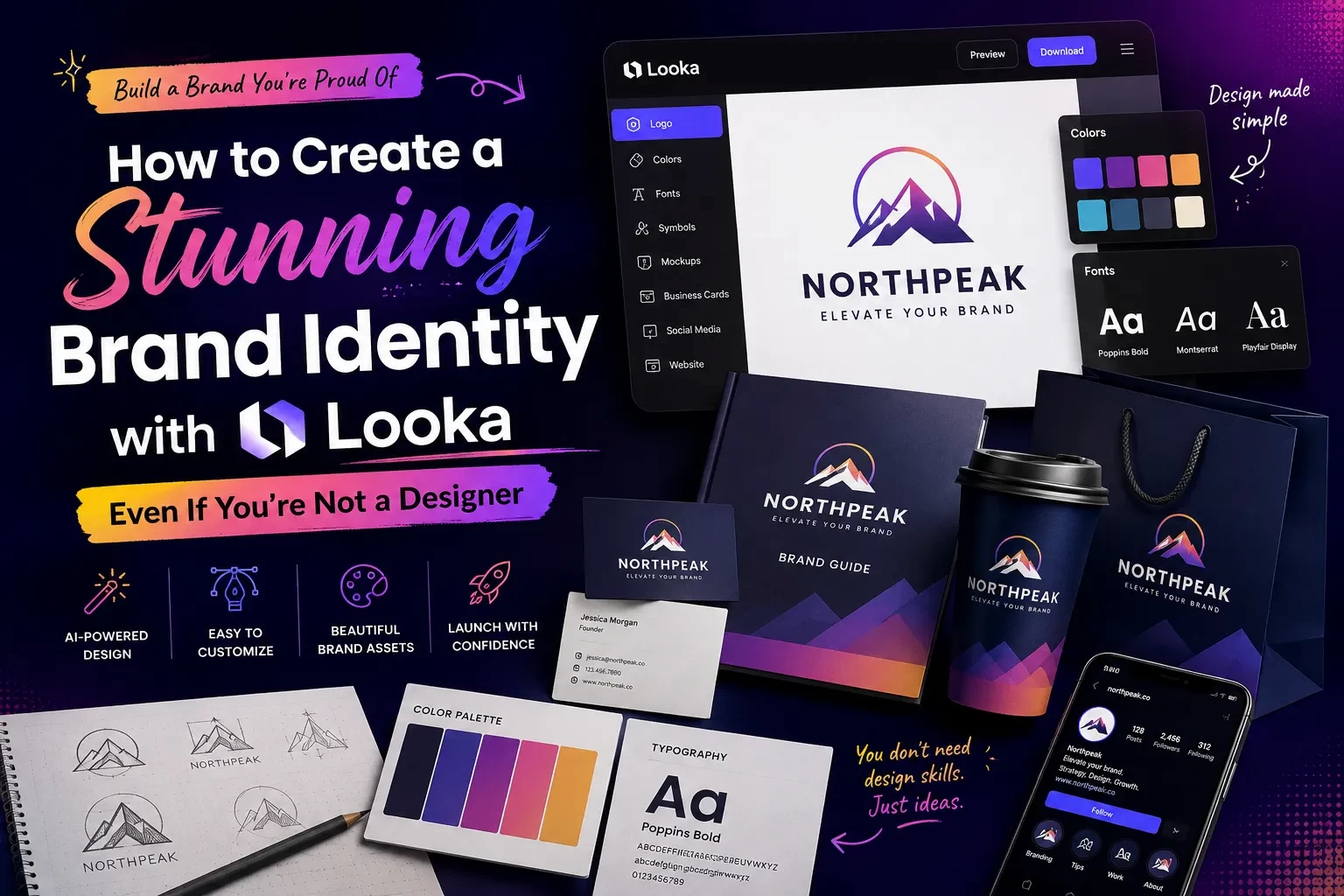
Good visual identity for a solo brand is less about decoration and more about recognition. People should be able to recognize your work before they read your name.
You need a simple system:
• Two or three brand colors
• One headline font and one body font
• A profile photo or illustration style
• A repeatable post layout
• A consistent thumbnail style
• A short bio
• A one-sentence positioning statement
• A link destination that matches your current offer
Adobe Express and Canva are both practical for this stage because they support templates and fast content creation. Adobe Express includes social posts, videos, logos, templates, and generative AI capabilities on its official product page (Adobe, 2026). (adobe.com) Canva’s Brand Kit can store logos, colors, fonts, and images for personal branding (Canva, 2026). (canva.com)
Do not spend six weeks designing a logo before testing the message. A simple, consistent system is enough.
A Good Personal Brand Visual System Should Do Three Things
It should make your content easier to recognize.
It should make your ideas easier to consume.
It should reduce production time.
If a template looks beautiful but takes too long to customize, it is not a good system for a solo operator. If a carousel looks premium but says nothing original, it will not build trust. Design should support the idea, not hide the lack of one.
Turn Attention Into Owned Audience Growth
A profitable personal brand needs a path from public content to a deeper relationship.
That path can be simple:
- A social post answers a painful question.
- The post invites readers to download a checklist, join a newsletter, or book a diagnostic call.
- The landing page explains the value clearly.
- The email sequence or newsletter builds trust.
- The offer appears when the reader has enough context.
A lead magnet does not need to be long. In fact, short is often better if it solves one narrow problem.
Examples:
• “AI Prompt Checklist for Solo Consultants”
• “LinkedIn Profile Audit Template for B2B Founders”
• “30 Questions to Define Your First Digital Offer”
• “Client Onboarding Automation Map”
• “Personal Brand Content Calendar for Technical Experts”
Mailchimp’s landing page documentation describes landing pages as standalone pages people reach from ads, emails, social posts, or other links, often for short-term goals such as promoting an offer or hosting a signup form (Mailchimp, 2026). (mailchimp.com) That is exactly what a solo personal brand needs: a focused conversion point.
The key is message match. If your post is about fixing a messy client intake process, your landing page should offer something related to that problem. Do not send everyone to a generic homepage.
Create an Offer Before You Feel “Ready”
A personal brand becomes profitable when it has an offer. The offer does not have to be complicated, expensive, or permanent.
Start with a small, clear offer that lets you learn.
Examples:
• A 60-minute audit
• A strategy session
• A template pack
• A paid workshop
• A short cohort
• A consulting sprint
• A done-with-you setup
• A paid newsletter tier
• A digital guide
Stripe Payment Links allow users to create payment pages without a website or code, according to Stripe’s official product page and documentation (Stripe, 2026). (stripe.com) Calendly supports scheduling pages and calendar connections, and its documentation explains how users can connect calendars and customize scheduling links (Calendly, 2026). (calendly.com)
That does not mean these tools are right for every case. If you sell high-ticket consulting, you may need a sales conversation before payment. If you sell low-cost templates, a direct checkout link may be enough. If you sell regulated professional services, you may need compliance review before publishing claims, testimonials, or payment flows.
Step-by-Step: Build Your Personal Brand Workflow in 30 Days
1. Define the audience and painful problem
Write down the person you want to serve and the problem you can credibly help them solve.
Why it matters: vague audiences produce vague content. A clear audience gives you examples, language, pain points, and offer ideas.
Practical tip: write five real questions your audience asks. If you cannot list them, interview people before building content.
2. Audit your existing credibility
Collect proof you can honestly show: work samples, lessons learned, frameworks, before-and-after examples, published writing, technical skills, client outcomes, or professional experience.
Why it matters: personal branding works faster when people can see why they should trust you.
Warning: do not exaggerate client results or imply endorsements you do not have. The FTC’s endorsement guidance says material connections between advertisers and endorsers should be disclosed when they affect how people evaluate the endorsement (FTC, 2023). (ftc.gov)
3. Pick your core content pillars
Choose three to five recurring themes.
For example, a personal brand around AI productivity for consultants might use:
• AI workflow tutorials
• Client communication templates
• Tool comparisons
• Mistakes in automation
• Case-style breakdowns
Why it matters: pillars prevent random posting while still giving you creative range.
Practical tip: each pillar should connect to a future offer. If a pillar attracts attention but has no relationship to revenue, use it carefully.
4. Build a simple brand kit
Create your color palette, fonts, profile image style, post templates, and short bio in Adobe Express, Canva, or a similar design tool.
Why it matters: consistency makes your work easier to recognize and faster to produce.
Practical tip: create templates for three formats only: text post graphic, carousel, and short video cover. Add more only after you publish regularly.
5. Set up a content operations board
Use Notion, Airtable, Trello, Google Sheets, or another tool to track ideas from draft to published.
Why it matters: most creators do not fail because they lack ideas. They fail because ideas never become finished assets.
Practical tip: include a “source of insight” field. Was the idea from a customer call, comment, search query, failed experiment, or industry trend? This keeps content grounded.
6. Publish on one primary platform for four weeks
Choose LinkedIn, YouTube, TikTok, Instagram, X, or a blog based on where your audience already pays attention. Publish consistently enough to learn, not so aggressively that quality collapses.
Why it matters: you need audience feedback before scaling.
Practical tip: use one strong post per week as the source asset. Repurpose it into shorter posts, an email, and a visual.
7. Create one email capture path
Build a landing page for a specific checklist, guide, template, or newsletter promise. Connect it to your email platform.
Why it matters: an owned audience protects you from platform changes and gives warm prospects a next step.
Practical tip: your landing page should answer three questions quickly: Who is this for? What will they get? Why should they trust you?
8. Launch one small paid offer
Do not wait until the brand feels fully polished. Offer something narrow and useful.
Why it matters: revenue feedback is different from content feedback. Likes show interest; purchases show demand.
Practical tip: start with an offer you can fulfill manually. Automation comes after you understand what buyers actually need.
9. Review performance weekly
Track only a few numbers at first:
• Posts published
• Saves, comments, replies, or shares
• Email subscribers
• Landing page conversion rate
• Calls booked
• Sales or qualified leads
• Questions repeated by the audience
Google Analytics 4 supports recommended events that can help businesses measure user behaviors and generate more useful reports, but implementation details should follow Google’s current documentation (Google Analytics, 2026). (developers.google.com)
Practical tip: do not optimize for reach alone. A smaller post that brings qualified inquiries may be more valuable than a viral post outside your market.
Cost and ROI Considerations
A lean personal-brand stack can start with free or low-cost plans, but costs can creep up quickly when you subscribe to overlapping tools.
Before paying for a tool, ask:
• Does this tool help me publish, sell, or measure better right now?
• Am I replacing a real bottleneck or avoiding hard work?
• Will this reduce time spent on repeated tasks?
• Does the plan include features I actually need?
• Can I cancel easily if the workflow changes?
• Will this tool handle sensitive data or customer information?
Pricing, usage limits, and plan features change often, so check official pricing pages before making decisions. Avoid building your workflow around a feature that only exists in a plan you do not intend to keep.
A practical starting stack could be:
• Notion or Google Docs for planning
• Adobe Express or Canva for design
• Native platform scheduling or Buffer for publishing
• Mailchimp, Substack, or ConvertKit for email
• Calendly for calls
• Stripe Payment Links, Gumroad, or another checkout tool for simple payments
• Google Analytics and platform analytics for measurement
You do not need all of this on day one. Start with planning, publishing, and one conversion path.
Privacy, Security, and Compliance Considerations
Personal branding often feels low-risk because it starts with content. But once you add AI tools, email platforms, analytics, payments, booking pages, and customer forms, you are handling data.
Be careful with:
• Client names and private examples
• Email addresses
• Payment information
• Calendar availability
• Uploaded documents
• AI prompts containing sensitive business information
• Screenshots that reveal private dashboards
• Testimonials and endorsements
• Affiliate relationships
The FTC’s endorsement materials explain that disclosures may be needed when there is a material connection between an endorser and a seller, including relationships that could affect how consumers evaluate a recommendation (FTC, 2023). (ftc.gov) If you recommend tools and may earn a commission, disclose that relationship clearly and near the recommendation.
For AI tools, avoid pasting confidential client data into systems unless you understand the vendor’s terms, privacy controls, and data handling. For email tools, use consent-based list growth. For analytics, avoid collecting more personal information than you need. For payment and scheduling tools, use reputable providers and protect account access with strong passwords and multi-factor authentication where available.
This is not legal advice. If your work involves regulated industries such as finance, healthcare, law, education, or employment, get appropriate professional review before making public claims or collecting sensitive information.
When Not to Hire an Agency Yet
Hiring an agency can make sense later, especially if you already have product-market fit, clear positioning, a validated offer, and enough revenue to justify scale. But many people hire too early.
Do not hire an agency yet if:
• You cannot explain your audience in one sentence
• You do not know what offer you want to sell
• You have not published enough to learn what resonates
• You expect the agency to invent your expertise
• You need revenue immediately and have no existing demand
• You will not be available to provide subject-matter input
• You want polish more than clarity
An agency can amplify a working message. It usually cannot manufacture authentic expertise from nothing.
Common Mistakes and Troubleshooting
Mistake: Your content gets likes but no leads
Why it happens: the content is interesting but not connected to a specific buyer problem. Broad inspiration often attracts passive engagement.
How to fix it: add more problem-specific posts. Use examples, teardown formats, checklists, and “how to decide” content. Include a relevant call to action that matches the topic.
Mistake: You keep switching tools
Why it happens: tool switching feels productive because setup is easier than publishing.
How to fix it: freeze your stack for 30 days. Use one planning tool, one design tool, one publishing path, and one conversion path. Improve the workflow only after reviewing results.
Mistake: Your brand looks polished but sounds generic
Why it happens: visual identity was built before positioning. The design is consistent, but the message could belong to anyone.
How to fix it: rewrite your bio, content pillars, and lead magnet around a narrower audience and a sharper problem.
Mistake: You publish educational content but never sell
Why it happens: you may be building trust but not creating a buying path. Readers do not know what to do next.
How to fix it: create one small offer and mention it naturally when relevant. Add a booking link, waitlist, or checkout page. Keep the offer connected to the content.
Mistake: You rely only on social platforms
Why it happens: social feedback is immediate, while email growth feels slower.
How to fix it: add one owned channel. Invite readers to a newsletter, checklist, or resource library. Email subscribers are not guaranteed buyers, but they give you a more direct relationship than platform-only reach.
Mistake: You automate too early
Why it happens: automation feels scalable, but the manual process has not been understood yet.
How to fix it: manually deliver the first few versions of your offer. Notice repeated questions, objections, and steps. Automate only the parts that are stable.
Mistake: You make income claims too aggressively
Why it happens: personal branding advice online often overpromises speed and certainty.
How to fix it: use cautious, accurate language. Show process, proof, and limitations. Do not imply that a tool, template, or platform guarantees revenue.
Practical Mini Case Study: A Consultant Builds a Brand Without an Agency
Imagine a cybersecurity consultant who wants to attract small professional-services firms.
A weak brand position would be: “I post about cybersecurity tips.”
A stronger position would be: “I help small accounting and legal firms reduce preventable security mistakes without hiring a full-time security team.”
The consultant chooses LinkedIn as the discovery channel and email as the owned channel. In Notion, they create a content board with five pillars:
• Password and access mistakes
• Client data handling
• Phishing awareness
• Vendor risk questions
• Simple security checklists
They use Adobe Express or Canva to make a consistent weekly checklist graphic. They publish three times per week: one short explanation, one mistake breakdown, and one practical checklist. At the end of relevant posts, they invite readers to download a “Small Firm Security Self-Audit.”
The landing page collects email subscribers. The follow-up email offers a paid 60-minute security review. Calendly handles scheduling. Stripe Payment Links handles simple payment if the buyer is ready.
The system is not complicated. It works because every piece connects: audience, problem, proof, content, email, offer, and measurement.
FAQ
Conclusion
A profitable personal brand is built by connecting expertise to a market need, then using digital tools to publish, distribute, capture demand, and convert trust into revenue. The tools are helpful, but they are not the strategy. Your positioning, proof, consistency, offer, and follow-through matter more.
Start smaller than you think. Choose one audience, one painful problem, one primary platform, one owned channel, and one simple offer. Then build the workflow around those decisions.
Use this checklist before you buy another subscription or redesign your profile:
• Can I describe my audience and problem clearly?
• Do my posts show proof, not just opinions?
• Do I have one place where interested readers can subscribe or book?
• Is my visual system consistent enough to recognize?
• Do I have one paid offer connected to my content?
• Am I tracking business signals, not only views and likes?
• Am I disclosing affiliate or paid relationships clearly when relevant?
If you can answer yes to most of those, you do not need an agency to begin. You need a focused system, a useful point of view, and the discipline to improve it every week.
Sources
• Google Search Central — https://developers.google.com/search/docs/fundamentals/creating-helpful-content
• FTC Endorsement Guides: What People Are Asking — https://www.ftc.gov/business-guidance/resources/ftcs-endorsement-guides-what-people-are-asking
• FTC Endorsements, Influencers, and Reviews — https://www.ftc.gov/business-guidance/advertising-marketing/endorsements-influencers-reviews
• Adobe Express — https://www.adobe.com/express/
• Canva Brand Kit Help Center — https://www.canva.com/help/brand-kit/
• Canva Personal Brand Kit Help Center — https://www.canva.com/help/personal-brand-kit/
• Notion — https://www.notion.com/
• Buffer — https://buffer.com/
• Mailchimp — https://mailchimp.com/
• Mailchimp Landing Pages Help — https://mailchimp.com/help/about-landing-pages/
• LinkedIn Creator Tools — https://members.linkedin.com/create-tools
• LinkedIn Help: Manage a Newsletter — https://www.linkedin.com/help/linkedin/answer/a517925
• Stripe Payment Links — https://stripe.com/payments/payment-links
• Stripe Docs: Payment Links — https://docs.stripe.com/payment-links
• Calendly — https://calendly.com/
• Calendly Help: Customize Scheduling Page Links — https://calendly.com/help/how-to-customize-your-scheduling-page-links
• Google Analytics Recommended Events — https://developers.google.com/analytics/devguides/collection/ga4/reference/events